

Nervous Systems Need Love
Love changes the brain in ways that make people healthier, more empathetic, and more resilient. Just ask my neurodivergent child.

“Your son will likely have to live in a group home when he grows up.”
Dr. Mark, the anthroposophic physician, gravely shared this diagnosis with Karen and me.
I froze while Karen broke into uncontrollable sobs.
Wren, our kindergarten-age child, was a handful — more than our beloved Waldorf school could handle. The serene, nature-infused kindergarten, designed to feel warm, secure, and nurturing, was no match for the hell-on-wheels creative force we had brought into the world.
In 1989, ADHD had only been around for two years as a diagnosis. I often think of William Goldman (screenwriter for Butch Cassidy and the Princess Bride), who had low regard for the certainties of professionals when he said, “Nobody Knows Anything.”
But I digress.
Our Lark Ascending
In utero, Karen did all the right things — prenatal yoga, perfect diet, and even spent every afternoon letting the lilting strains of The Lark Ascending infuse her gestating child with love.
Reshad, our Sufi teacher, surmised that our newborn was different. “He will likely be a musician, a writer, or a healer.”
I dismissed this as projection because Reshad was all three. But it didn’t take long to realize that Wren was different. The whole incarnation thing was not working out for Wren. Navigating a chaotic world without a grounding wire was just too much amperage for our little kid.
We quickly learned to scope out every restaurant for its “stimulation factor” before entering, but ended up taking turns on the sidewalk anyway to soothe Wren’s nervous system.
Yes, the honeymoon was over.
When Wren reached school age, we greeted each day with battle-scarred reflexes. Would Wren be sent home or make it through the day? The earth-toned world of Waldorf did not work out, so we tried a Quaker school. Great school, but the kids were stuck in a trailer classroom — a tin-can corn popper for Wren’s nervous system.
Tough Love
Around this time, an organization called Toughlove had spread nationwide with about 1,700 chapters.
Toughlove parents are taught not to feel guilty about their child's misbehavior, because children are responsible for their own actions.
Yeah right. Despite the Toughlove ethos, our fierce fellow parents made us feel like failures at setting boundaries and asserting dominance like drill sergeants.
With every instinctive act of support, I faced Solomon’s dilemma: If you throw the baby into the deep end, do you just hope he floats?
Eventually, we enrolled Wren in a special school for “learning differences” (current tuition $45,000). To Wren’s credit (and our finances), Wren chose to be mainstreamed in our local high school, but with each writing assignment, Wren’s anxiety would skyrocket.
Picture the scene: 11:30 at night, Radiohead’s dreary song Creep on continuous repeat, calming Wren’s nervous system as he stared at the blank page.
I hovered like Coach Rocky in the corner while Karen offered sweet encouragement, “You can do it, you can do it.”
Colleges that Change Lives
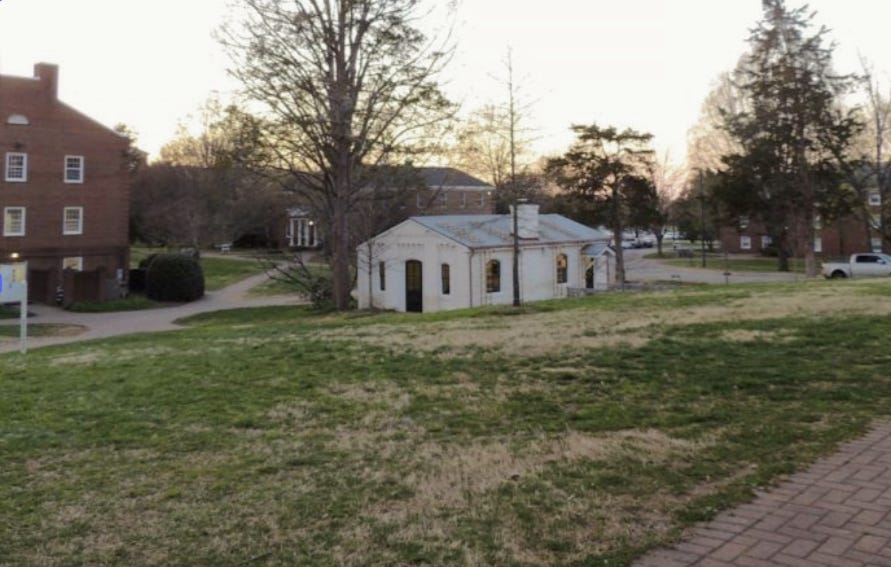
The book Colleges That Change Lives steered us to Guilford College — a Quaker-based school where students might come to class in pajamas. Even better, the football team celebrated the world’s greatest oxymoron, hitting the field as the Fighting Quakers. I learned that the school was situated where a Quaker settlement tended wounded soldiers from both sides during the Revolutionary War — pretty cool.
Guilford offered the anti-matter for Toughlove and I was excited by its collaborative, student-led support system for writing challenges. Hooray, no more Coach Rocky! In truth, Dad still helped to edit papers.
I was particularly fond of Guilford’s Quaker minister, Max Carter. Originally a conscientious objector during the Vietnam War, Carter served as Guilford’s “Yoda” — offering a safe space, the Hut, where students could share their fears and concerns in confidence.
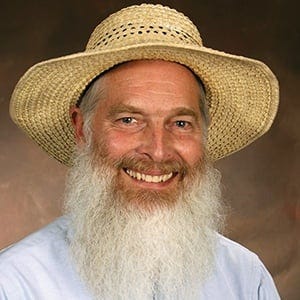
As Max Carter put it, “Becoming those students’ surrogate parents (and now grandparents!) while they are at the College has been a real joy.”
Sadly, the College was hell-bent on sanitizing its trademark weirdness. The Hut has since been modernized into a slick coffee shop/student lounge.
After college, Wren embarked on a self-styled “hero’s journey.”
Not quite ready to fit into the rat race, Wren began to travel — cobbling enough funds each summer for walkabouts in some pretty dicey countries: Egypt, Israel, Vietnam, Cuba, Belize, Germany, France, New Zealand, and Colombia.
Wren’s planning consisted of choosing the first night’s hostel, and that was it. After a first night’s sleep, Wren happily stepped into the serendipitous flow of life in a foreign land. Wren got robbed in Belize, seriously hurt on a motorbike in Vietnam, and found themself in the middle of Tahrir Square after the Egyptian Coup. For the most part, Wren trusted life’s benevolence and connected with amazing people wherever Wren went.
When it was time for Wren to fully join adult life, Karen and I were at a loss as to how Wren would manage in the working world. Wren followed one of his college friends to the Bay Area and learned of a part-time job that suited his temperament — as an ABA technician (Applied Behavior Analysis, often called a Behavior Technician or RBT).
An ABA tech works one-on-one with children with autism spectrum disorder. The pay is terrible, and job security is nil, but we were excited. More importantly, Wren discovered a neurodivergent talent as an “autism whisperer,” connecting with kids who were often nonverbal.
Around this time, Karen went for a walk with a friend in the Mendocino redwoods. Two hours later, she returned, announcing, “I’m going to seminary to become a chaplain.”
“What? You want to go to WHERE!?” (Insert my Jewish inflection).
My Sufi-infused wife hadn’t been to church since she was a child.
After earning her Master of Divinity degree and getting ordained as a Presbyterian minister, Karen became a Clinical Pastoral Education (CPE) Educator. The rigorous process took several years — mainly because her deep-seated anxiety sabotaged her oral committees, forcing her to start over three times over the course of three years.
Eventually, Karen passed her committee and was hired by TACC at St. Luke’s Episcopal. Two weeks before she was to begin her dream job as Director of Clinical Pastoral Education, she collapsed into my arms in an elevator from lung cancer that had metastasized to her brain. We celebrated New Year’s Eve in the ER, ruminating on life and death as the speaker above the door cheerfully announced, “It’s 12 o’clock, everyone. Happy New Year’s!”
Karen started running chaplain programs immediately after brain surgery and in the middle of chemo and radiation. Miraculously, she beat the cancer and became a respected voice among colleagues. After being squashed as a child, asserting her professional authority healed a major childhood wound.
Karen’s grit and perseverance rubbed off on all of us. This might explain why Wren decided to go back to school for a Master’s Degree in Applied Behavior Analysis at Ball State University. Online degrees are designed for busy people looking to advance their careers while working full-time. For Wren, the lack of human contact demanded extra organization, focus, and executive function to persevere in an online program.
Wren decided to minimize the stress by spreading the program out, taking one course per semester — a three-year process.
Completing graduate-level assignments while working with autistic children in their homes and managing the logistics of everyday life were overwhelming. Every waking hour of the day was booked.
And then, another shock.
Eight years after Karen started her dream career, and in the middle of the pandemic, her cancer returned. She was admitted into an experimental cancer trial at Emory, which was initially a great success, but after a year of treatment, the cancer returned aggressively. Before we understood the symptoms, she passed away.
The loss upended my world, but I was buoyed by years of deep practice in Sufism and Advaita Vedanta meditation, which offered solid ground for my grief journey — plus a big shout-out to my neighborhood yoga studio, Form Yoga, that provided a sense of community. I can’t imagine how children and young adults cope with losing their mom — especially without the more fully-formed self that comes with adulthood. I watched my kids tough it out — nose to the grindstone of life.
Eleven months after Karen passed…
I was enjoying sushi with a friend when an ominous text appeared on my phone.
“This is Wren’s supervisor at work. He has gone missing. Please give us a call.”
My sushi was still untouched when I called back. His boss added additional information. Wren had sent an email to their classmates: “Good luck with ABA, have a good life, I’m done. I’m outta here.”
Was the tone suicidal or a mental collapse? Probably both. After years of helping Wren stay afloat, and now, 11 months after losing Karen, I collapsed. My 38-year journey as a husband, widower, and a “not-tough-enough” parent had emptied the remaining emotional fuel in my tank.
Fortunately, Wren’s younger brother Jack leaped into action. He grabbed the next flight from Providence, RI, to San Francisco while I ruminated. What does Jack expect to do, I wondered? With hundreds of square miles, his brother could be under a bridge or over a cliff.
Jack called the Oakland police, and with unexpected grace, Wren’s name came up in the system. Wren had been picked up in Chico, CA, 160 miles to the north.
My adrenaline returned, and I was nonstop on the phone. I learned that the police booked Wren on petty vandalism, threw them in jail, and then, realizing their prisoner was having a mental breakdown, admitted Wren into the local hospital.
This is where the angels descended. The hospital had no idea what they were dealing with and inadvertently let Wren stroll out of the hospital, opening Wren to self-harm on the street.
I was on the phone with the jail intake supervisor, pleading with her to find Wren. With needle-in-a-haystack luck, the intake lady lived near the hospital, remembered Wren, and on her way home, spotted Wren on the street. Hooray for angels.
The police picked Wren up a second time, hospitalized him, and the doctors administered heavy drugs. Jack and a friend drove to Chico, picked up Wren, and drove 160 miles back to San Francisco. Another close friend, a psychiatric PA, got Wren into one of the Bay Area’s best units. Wren was suffering from severe psychosis.
I flew to San Francisco, visited Wren daily during treatment, and eventually, arranged for Wren to come home to Atlanta for the holidays — just the two of us.
God’s nervous systems all need love.
I knew something about anxiety because of Karen’s suffering from an abusive childhood. Over the course of our marriage, I took on the role of co-regulating her nervous system. This meant, to the best I could, being present and reliable. Night after night, I stroked her back as she fell asleep. Ironically, this is what she taught her chaplain students.
“The chaplain’s physical and emotional stability acts as a secure base. Through interpersonal attunement, this grounded presence naturally helps de-escalate the patient's hyper-aroused or hypo-aroused nervous system, creating a safe container for emotional processing.”
And that’s what I did with Wren. Over the course of several weeks, we cooked meals, walked the dog, went to yoga, and watched TV. I held Wren in a sea of normalcy. I watched how calming my nervous system was connected with Wren. It’s even measurable: the heart’s electrical activity emits a magnetic field over 100 times stronger than the brain’s, detectable up to 3 feet away.
After two months, my friends were terrified of letting Wren return to the Bay Area, but I trusted that Wren was on the other side of the crisis. Wren continued to receive mental health support, but eventually got off the heavy psychiatric drugs, started regular yoga, and on his own, discovered self-compassion practices to settle the nervous system without drugs. Biggest of all, Wren restarted the semester at grad school.
Tonight, a friend sent me an article about neurotheology: The study of what happens at the intersection of the brain and religious experience.
The author conducted brain scans of people in compassion meditation and found evidence of neuroplasticity:
A person who has a fear-based perspective is likely to see fear in everything, resulting in strong anxiety and distress in the brain. A person who has a more compassion or love-based perspective is more likely to see connections between things and be open to other people and ideas.”1
People who pray regularly show increased activity in the prefrontal cortex, which governs focus and decision-making, and the anterior cingulate cortex, associated with empathy.
Focusing attention is associated with increased frontal lobe function, which can augment concentration and help regulate emotional responses.
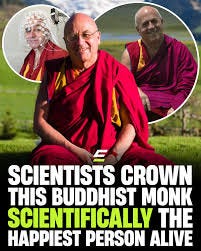
University of Wisconsin researchers studied the effect of compassion meditation on Buddhist meditator Matthieu Ricard to report:
During compassion meditation, Ricard’s brain produces a level of gamma-wave synchrony—linked to consciousness, attention, and learning—never before reported in neuroscience literature.2
Ricard showed an abnormally high activity ratio in the left prefrontal cortex compared to the right. This asymmetry is strongly correlated with a high capacity for happiness, resilience, and a reduced propensity toward negativity.3
And what about me, your widower friend? I was also thrust into a life course of self-compassion, diving into Jung, shadow, and integration. I’m writing this article to help integrate the long, challenging arc of my story as a parent.
More than Jung, I see life through the lens of a screenwriter. Every scene has a climactic beat, and here it is. Wren sent me this picture today. Drum roll:
“Karen, if you can hear me — our little guy did good.”


Or for a caffeinated act of support:
https://relevantmagazine.com/current/science/the-neuroscience-of-encountering-god/
https://pmc.ncbi.nlm.nih.gov/articles/PMC526201/
https://info-buddhism.com/Empathy-Compassion-Neuroscience-Ricard-Altruism.html
That's a great story and such a tribute to your son!
He looks so well. It’s the light in his eyes😊