

Katabasis
"So down and down and down and down / And down and down we go," Jimi Hendrix

“You mind if I smoke?”
Nick took a sip of our expensive single malt, lit up, and prepared to drop a pearl of wisdom: “The thing about you girls is that you’re afraid to look at the dirt in life. Like, somehow you’re exempt.”
Nick exhaled a small cloud while Karen instinctively held her breath. Karen was very pregnant, so she excused herself to our tiny kitchen.
Lori, Nick’s girlfriend, gripped her empty glass.
“Come on, Nick,” Lori complained.
Nick continued: “If you’re really honest with yourself, what you girls want is a fatter dick and a bigger wallet.”
Having heard the line too many times, the girls grimaced. Nick continued on this tack, but now bellowing to the kitchen because Lori had lost interest.
“Heh, heh, come on, be honest,” Nick blustered.
“Nicky, I’m getting tired,” Lori whimpered.
“I’m just calling it how it is,” Nick badgered. “Business, sex, religion, whatever — people size you up by what’s in your wallet — and your pants.”
Richard, Kathleen’s boyfriend, made the strategic blunder of refilling Nick’s glass.
“Thank you, Richard.” Nick sipped and continued. “There was a time when I vowed never to shoot a commercial, and now I’m driving a fucking cab.”
Nick sipped his Scotch and took a drag in succession.
“This town is about three things — money, sex… and money.”
“That’s two things,” I piped in.
“Okay, money, money, and fucking money — and it doesn’t hurt to be Jewish. It’s certainly not about art.”
Nick bellowed over the kitchen noise.
“Do you realize that I worked with Antonioni on Blow-Up? And George Lucas — he wanted me. Michael Jackson, ‘Boogie and the Beat.’ Rick James, ‘Super Freak,’ and ‘Give it to me Baby.’ And the launch of MTV? Fucking Pat Benatar. Your good friend Nicky invented the music video genre.”
The launch of MTV: My good buddy Nick’s Pat Benatar video on MTV Day One.
Nick sensed that he had everyone’s attention, so he queued up for the money shot:
“Benatar, ‘You Better Run’… Rascals remake, what a bitch. She was angry and pissed, didn’t want to be there and take direction like an actor, but I took her sassy little pouting cunt and turned it into something. You look at life; you see what nobody wants to look at — the dirt in life — and you discover art. That’s what an artist does. But, you guys measure people with money.”
“Nick, we love you just the way you are,” Karen chimed in.
“Nicky, I want to go home right now.” Lori pleaded.
“Lori, just breathe. Richard has poured another of his best Glenfiddich, so we mustn’t waste. Isn’t that what Reshad says, ‘Wastage is the only sin.’”
“Glenlivet,” Richard corrected.
“My best Glenlivet,” I further corrected.
“Fiddich, Livet. Life is only real when you Livet.” Nick laughed at his pun. “You got to live the moment and taxi driving seems to be my lot. But, Lori, why are you on my case? ‘Cause I’m not meeting your high standards?”
“Nicky, I’m not on your case. I just want to see you do something with your life. All you ever do is complain. You’re negative all the time.”
Lori stood to leave the table.
“Then why don’t you call a cab?” Nick snarled. “Oh, I am the cab.”
And with that, Nick stubbed out his cigarette and started to stand. Karen returned from the kitchen.
“Nick, you are an artist,” Karen offered.
She gave Nick a hug.
“Think of all the material you’re getting,” I added.
“Nobody wants to see the homeless rejects I pick up,” Nick groused. “They want Robin fucking Williams pretending to be homeless. Let’s go. And I’m sorry about all the smoke.”
Lori collected Nick, installed him into her tiny Fiat, and waved goodbye.
I scrubbed burnt bits of steak au poivre and thought to myself, “Why am I attracted to these people?” If life is a game of collecting the right ingredients, what am trying to bake? Knowledge? Fortune?
And with that. I stepped into Katabasis.
It’s a Greek word I learned from the poet Robert Bly. By definition, katabasis means descent, such as heading downhill, the sinking sun, a military retreat, or a trip to the underworld. We have many words in the English language for sinking, but only katabasis captures the fateful sinkholes that swallow a heretofore lucky life. According to Bly in Iron John:
When katabasis happens, a man no longer feels like a special person. He is not. One day, he is in college, being fed and housed – often on someone else’s money – protected by brick walls men long dead have built, and the next day, he is homeless, walking the streets, looking for some way to get a meal and a bed.
A switch gets flipped in katabasis. More than a life transition, the rug gets yanked, triggering a pivotal life change. Bly continues:
It’s as if life itself somehow ‘discharges’ him. There are many ways of being discharged: a serious accident, the loss of a job, the breaking of a long-standing friendship, a divorce, a ‘breakdown,’ an illness.
The way down seems… to require a fall from status, from a human being to a spider, from a middle-class person to a derelict. The emphasis is on the consciousness of the fall.
Six months later, the phone rang. It was Nick.
“Hi… can’t really talk.” Nick rambled into my ear without any backstory. “I’ve been away; crazy stuff. Been to the moon and back. It will be a movie. This is very big, and I need to see you.”
“Sure,” I replied.
Cryptic phone calls never lead to good, and Nick babbling like an alien abductee should have been my signal to hang up, but the word “movie” was my sucker punch.
When soldiers come back from war, they are different. Nick was palpably different in that way. Without explanation, Nick came by the house to drop a screenplay in my lap.
“Read this,” he said, “then we’ll talk.”
I picked up the script — with two hands. In the movie business, anything over 120 pages is suspect. If it’s 160 pages, producers thumb to the end, see the page number, and pass. After a certain weight, there’s no thumbing; the script goes straight to the slush pile. I wasn’t versed in these formulas, so I opened the thing, paged to the back, and noticed it was 250 pages. Nick had also cheated with the margin widths, another instant disqualification.
I considered the title “The Fight for Love.” Clever with ironic possibility, but Nick didn’t do irony. Too bad this will be on-the-nose — another disqualifier. I flipped it open and began to read.
I was mesmerized.
The story began at the time of Nick’s disappearance, not long after our dinner. He was driving his cab around the Wilshire District when he got a radio call to pick up a passenger at Antinori’s, an Italian restaurant in Beverly Hills.
Nick pulled up as two guys stepped out of the restaurant speaking in Italian. They embraced, then Giovanni Mazza entered Nick’s cab.
Giovanni — and the two-pound screenplay — would soon enter my life.
I first met Giovanni while I was parked on a side street in Beverly Hills.
To create a visual, combine Danny Devito with Donald Trump and add an Italian accent; that was Giovanni.
Nick and Giovanni headed toward my car. I had my guard up, but Giovanni’s mojo quickly extinguished my skepticism. He would focus his heat-seeking charisma on anyone in sight, including an unsuspecting passerby carrying a pizza box.
“Pizza, pizza,” Giovanni seduced with basso bluster. “Give me a piece of pizza.”
The shocked passerby opened his pizza box to oblige. Sensing Fortune’s open door, Giovanni grabbed two slices. I watched in fascination as Giovanni leaned against a parked car, folded the slices, and devoured them with pleasure.
Giovanni caught my gaze. “What? What are you looking at?” he scolded. “It’s no criminal to be hungry, and my good friend here is very generous. Thank you. Grazie!”
I watched the hapless guy shuffle off stage left.
I had an unfulfilled karmic imperative to produce a movie, and soon I was bankrolling The Fight for Love.
Yes, I raised (borrowed) $30,000 from friends, and the die was cast.
When Karen met Giovanni, she assumed he was fully vetted — trusting me. I, in turn, trusted Nick. The fact that Giovanni was a film producer and a con man was immaterial. What I was seeking was access to my personal power. The Giovanni school was a school for power — self-actualized power. It’s all laid out in the screenplay:
SCENE: Late at night at the Moustache Cafe in Westwood. Giovanni takes a bite of chocolate souffle. Some of it falls on his shirt, and he looks puzzled.
“You know what you see in me, Nick?” Giovanni takes another bite of dessert.
“I’m not sure,” Nick replies.
“I got power. Real power.”
Nick is uncertain, but Giovanni goes for the kill.
“There’s no many men like me on this earth.”
“How many?”
“No many… People in Hollywood, they see me coming, and they go, ‘Ohh shit.’”
“Why’s that?”
“Nobody can bullshit Giovanni. I always know when somebody lie. Some people in this world are very different, kid. I’m one. If you break the trust with me, it’s finished.”
I know what you’re thinking: Con man. But I was seduced. I longed to upscale my life. Upscale and Katabasis are funhouse mirror images of each other — up versus down, indistinguishable.
So, when Giovanni asked if I could raise $30,000 in forty-eight hours to launch a film production company, there were two possible answers:
The first was: “No, I’m a small-time guy with small-time friends, so this is impossible, and by the way, you’re a con man, so again, the answer is no.”
The second was, “I’m at a crossroads in my life, and this is an opportunity to summon unexplored personal power and break through the mental and emotional limitations that stand in the way of Fortune, so I’m game. Let’s make a motion picture.”
And just like that, I chose the latter — the keyword being “power.”
I first glimpsed Giovanni as a Jabba the Hutt archetype when we went to the bank for cash. I was awestruck watching his stubby fingers handle the money in a lustful, sensual, almost orgasmic fashion. In my Sufi innocence, I didn’t realize that such a person could exist — someone who lived simply to consume. If Giovanni were a man of power, he exercised it in the same way that a black hole engulfs a universe.

If Giovanni was Jabba in this movie, what about me? Robert Bly described my type in Iron John:
The naive, passive man must travel the road of ashes, descent, and grief: The naive man will lose what is most precious to him because of a lack of boundaries. This is particularly true of the New Age man, or the man seeking “higher consciousness.” Thieves walk in and out of his house, carrying large bags, and he doesn’t seem to notice them.2
Karen and I launched Giovanni on a mission to New York with high hopes that he would raise the big money for the film. Soon, it became apparent that he was using the money I borrowed from friends! to launch his daughter’s fashion line. Karen and I, sickened to our stomachs, whiplashed between hope and fear, fear and hope.
I was in total, utter shock and despair.
As Rumi explains:
“Show me a fear without hope, or a hope without fear. The two are inseparable.”
Go ahead and say it: “Bruce, you were such a schmuck.” Or, “I hope you learned your lesson,” or “What were you thinking?”
What you’re missing in your morally superior critique is that katabasis — the descent into ashes — is hardwired into a man’s transformative journey.
All the great men take this detour before becoming great. Consider the emissary of light and love, Richard Alpert, aka Ram Dass. Everyone saw the beads and robes, but overlooked Richard Alpert’s most important teaching — Katabasis — the one his alter ego Ram Dass rarely talked about:
Sara Davidson, in a 1972 interview for Ramparts Magazine, captured the shadow side of Ram Dass’ transformation from Harvard to the Himalayas:
At Harvard, Alpert taught psychology and practiced psychotherapy. He flew his own plane, collected antiques, cars, a sailboat, and scuba-diving equipment. Although he had spent five years in psychoanalysis, he says, he was tense and suffered diarrhea every time he lectured. He drank heavily and was a closet homosexual, “living with a man and a woman at the same time in two different parts of the city – a nightmare of hypocrisy.”
He looked at his colleagues on the A team at Harvard and saw that none seemed fulfilled or content. He feared he himself would wake up 40 years later no less neurotic or more wise, and he panicked. “I thought the best thing I can do is go back into psychoanalysis. But then I started to have doubts about the analyst:
“Is his life enough? Whose life is? Who’s saying, right, it’s enough?”
By 1967, Alpert was in a state of despair, the dimensions of which must have been truly hideous. He had cut all his lifelines and was adrift in the midst of nowhere. He could not go back to the straight world, and after hundreds of acid visions, neither he nor anyone knew how to make constructive use of the experience.
From this state of ashes, Ram Dass set out on an adventure to India.
In Iron John, Robert Bly includes an odd list of eight men who faced their ashes. The descriptions are mine:
Richard Pryor, comedian — Spent five months in jail for drunk driving and subsequently lit himself on fire with 151-proof rum while freebasing cocaine.
James Baldwin, author — Baldwin left his cruel and judgmental Pentecostal stepfather to become the first civil rights activist to come out as gay when “closeting” was the norm. He self-exiled to France.
John Cassavetes, film director — A long-term alcoholic, Cassavetes died from liver cirrhosis at age 59 (his second Saturn Return). At the time of his death, he had amassed a creative stockpile of 40 unproduced screenplays, three unproduced plays, and one unpublished novel.
C. Everett Koop, 13th Surgeon General — Koop was recognized for his landmark work on cigarette use, AIDS, and children with disabilities. As a young man, Koop spent a year in the hospital after a brain hemorrhage from a childhood skiing accident. His son died in a climbing accident while at Dartmouth.
Woody Allen, Director, writer, comedian — Allen’s prolific body of work includes the eerily prescient Crimes and Misdemeanors about a man who arranges a hit on his wife and gets away with the crime. Allen was accused by his adoptive daughter, Dylan, of sexual abuse. The Connecticut state attorney dropped the case because young Dylan was too “fragile,” and (life imitating art) Allen was never charged with the crime — but facing ashes, he became persona non grata in Hollywood.
Cesar Chavez, Farm labor activist — After founding the United Farm Workers, Chavez became a hero of the left, but his authoritarian leadership, need for the spotlight, and association with the group Synanon generated controversy and strife.
Jimmy Carter, Former President — After being elected to restore ethics and morality after Nixon, Carter had the bad luck to oversee the Iranian hostage crisis and command a disastrous rescue mission. Carter’s warmth and authenticity were painted as weaknesses by the Republican right wing. A plot by Reagan to delay the hostages’ release caused Carter to lose in a humiliating landslide (489 to 49 electoral votes).
Reshad Feild, Author, spiritual teacher — Feild’s new age classic, The Last Barrier, drew countless seekers to the spiritual path and brought the mystical poet Rumi into our culture. Reshad suffered a long dependency on alcohol, went through four marriages, faced financial and medical difficulties, and couldn’t form enduring relationships with teachers and mentors. Reshad became my teacher for nearly three decades. Always an enigma, Reshad rarely acknowledged his ashes, but he never hid them either.
Young men are falling behind.
According to the New York Times:
It’s Not Just a Feeling: Data Shows Boys and Young Men Are Falling Behind.
Boys’ educational achievement, mental health, and transitions to adulthood indicate that many are not thriving.
One can point to a multitude of factors, but according to Bly, young men fail to launch if they are protected from facing ashes:
“Ashes present a great diminishment away from the living tree with its huge crown and its abundant shade. The recognition of this diminishment is a proper experience for men who are over thirty. If the man doesn’t experience that diminishment sharply, he will retain his inflation, and continue to identify himself with all in him that can fly: his sexual drive, his mind, his refusal to commit himself, his addiction, his transcendence, his coolness. The coolness of some American men means that they have skipped ashes.”
Do women need to face ashes?
I asked this question to my friend Sarah while sharing a meal at the appropriately named “Thinking Man’s Tavern.” Sarah felt that childbirth performed a function similar to ashes for men:
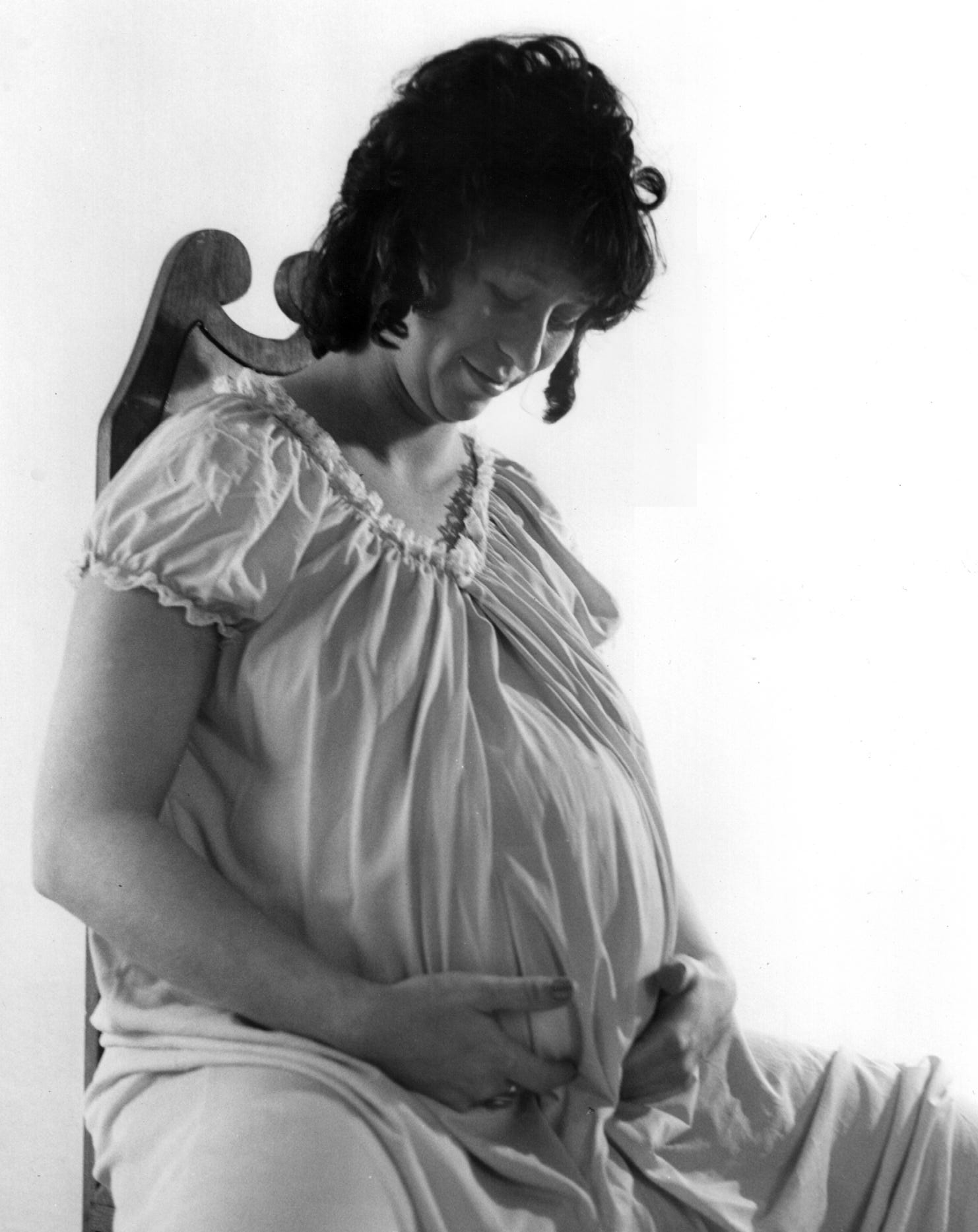
“With childbirth, a woman must let go of her identity and take responsibility for another person or two or three. The life that you knew is no longer, as you move into this role as a mother,” Sarah said.
“Mothers are always thinking about getting food on the table, where their kids are, whether they are safe, and whether they need help, she continued. “You and your child become tied together, regardless of their age or where they are.
In the book Matrescence: On Pregnancy, Childbirth, and Motherhood, author Lucy Jones would agree, arguing that having a baby “alters the neural basis of the self.” From the New Yorker:
Jones describes how mothers’ brains showed areas of shrunken gray matter and decreased cortical thickness, which a scientist told her could show a “fine-tuning of connections,” a streamlining, in order to adapt to the task of caring for a baby. Greater brain-volume losses, one lab found, predicted stronger mother-infant bonding. There was also evidence that the reward circuit of the brain had been updated to encourage responsiveness to the baby.
“My brain was now literally a new brain,” Jones concluded.
Whether a man facing ashes or a woman going through the physical transformation of childbirth, the dissolving of identity into both a mother or a mensch needs to be honored. Consider how we recognize the passage of adolescence through a Jewish bar/bat mitzvah, a Latin quinceañera, or a Masai warrior initiation.
At 14, the young Masai men go through rituals and ceremonies to become a junior warrior and this includes circumcision. The ‘Eunoto’ ceremony is where a large group of Maasai boys within the same age group get circumcised and become young warriors. Once they become warriors, they can settle down, start a family, and collect cattle.
Beyond adolescence, life offers additional passages into maturity:
Jimmy Carter became a humanitarian, Richard Alpert became Ram Dass, and for me, my movie debacle cracked open my capacity to feel.
This capacity to feel is the great initiation, but it’s missing from our masculine culture. From Bly:
“Young men for various reasons wanted their harder women, and women began to desire softer men. It seemed like a nice arrangement for a while, but we’ve lived with it long enough now to see that it isn’t working out.”
For Bly, ashes reveal the wound in our psyches and our gift to life:
“Our story… says that where a man’s wound is, that is where his genius will be. Wherever the wound appears in our psyches, whether from an alcoholic father, shaming mother, shaming father, or abusing mother; whether it stems from isolation, disability, or disease, that is precisely the place for which we will give our major gift to the community.”
I’m writing this immediately after Thanksgiving dinner. Life is grand.
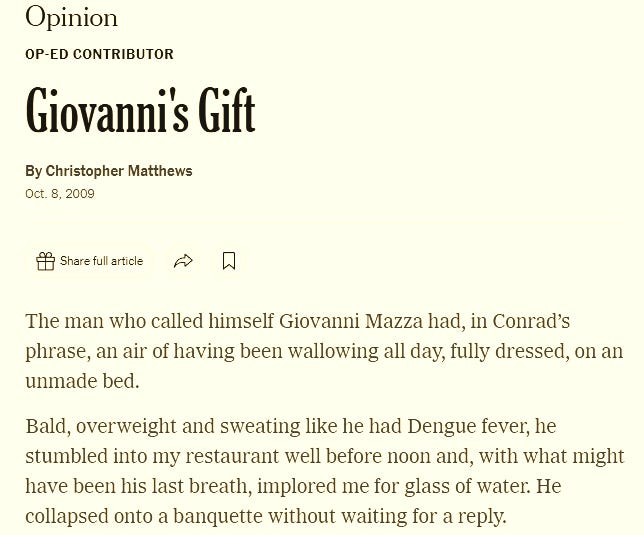
To read more about Giovanni Mazza, here’s a NYT article:
Wonderful essay as usual. Let me fill in a couple of details about Ram Dass. When he got kicked out of Harvard, he said everyone in the room was looking at him like he was a big loser, throwing away a career destined for a top spot in the profession. But he said “I felt free and relaxed.”. Nonetheless, in a short time, he was profoundly depressed (in India). This can be taken as his true katabasis moment, and now he was ready for any help, for grace. But since he was in saint training, he got more. A massive stroke 20 some years later took away his facile comic stories. And then a few years later he had another katabasis of some kind of sepsis which took most of his strength and health.
Wow, Bruce—this was incredible. I’d never heard of katabasis before, but I connected to it immediately.
I agree with Karen that women often enter katabasis through motherhood. We lose so much of ourselves when we become a mom—identity, time, sleep. There’s isolation and the relentless responsibility and they become a kind of long, quiet descent. A lot of us don’t even realize we’re in it until our kids are grown and we can finally come up for air.
For me personally, I feel like I’ve gone through katabasis more than once: motherhood but also betrayals that sent me into some deep underworld places, spitting me out into a sort of sovereignty where I had to rebuild and reclaim who I was. It changed me in ways nothing else could.
Maybe the difference in katabasis for men is it often arrives as a rupture of some kind—sudden collapse, a loss, a shattering of identity. For women, it’s usually slower and quieter, almost cyclical.
But the outcome is the same for both men and women—the ashes reveal the wound, and the wound reveals the gift.
That line from Bly is really sticking with me: “Where a person’s wound is, that’s where their genius will be.”
My own descents have totally burned away who I thought I was supposed to be. I’m finally beginning to see the shape of who I really am.
Truly loved this piece. And what a couple stressful people Nick & Giovanni were! I would never go: “Bruce, what were you thinking?!” Simply because I’d have totally gotten taken in by Giovanni too—I think I dated a version of him last year! 😂